If Hollywood does anything, it’s repeats itself. The 1970s, the 1990s, and the early 2000s, disaster movies always make their way into the cineplex. Not all of them succeed but the ones that do become pop culture references for a long time.
Unlike disaster movies of the present day, Hollywood did it for different reasons. In an effort to combat the rise of television, movie studios were trying to find some way to get people back into the seats. Many studios believed that since people could see older movies for free via an antenna, why would they pay movie to see movies in an expensive theater?
During the sixties, studios were throwing out musical spectacles to entice people. Others threw up major World War 2 big budget movies. However, it wasn’t all sunshine and rainbows. People started growing tired of these types of movies. Hello, Dolly and Doctor Dolittle crashed and burned and started the demise of big budget musicals. People’s tastes were starting to change.
The Towering Inferno Holds Up
The Vietnam War was going on. Protests appeared on the news. Student protesters were being murdered by National Guardsman. Corruption by the highest office in the land. By the dawn of the seventies, people started watching movies that represent the time. Movies with anti-heroes like Popeye Doyle and Harry Callahan were driving people to the cinemas.
TV actors breaking into films. The decade was littered with films like The Poseidon Adventure, Earthquake, Meteor, and The China Syndrome brought people into the seats.
The Towering Inferno is a Classic
One of the producers of the time always knew what people wanted. Irwin Allen had a huge hit with the Poseidon Adventure in 1972. Using former stars like Ernest Borgenine, Shelly Winters, and Red Buttons. Starring a deconstructing priest played by Gene Hackman. A year after The French Connection exploded on the screen and two years before The Conversation.
It set the template for what these disaster movies would become.
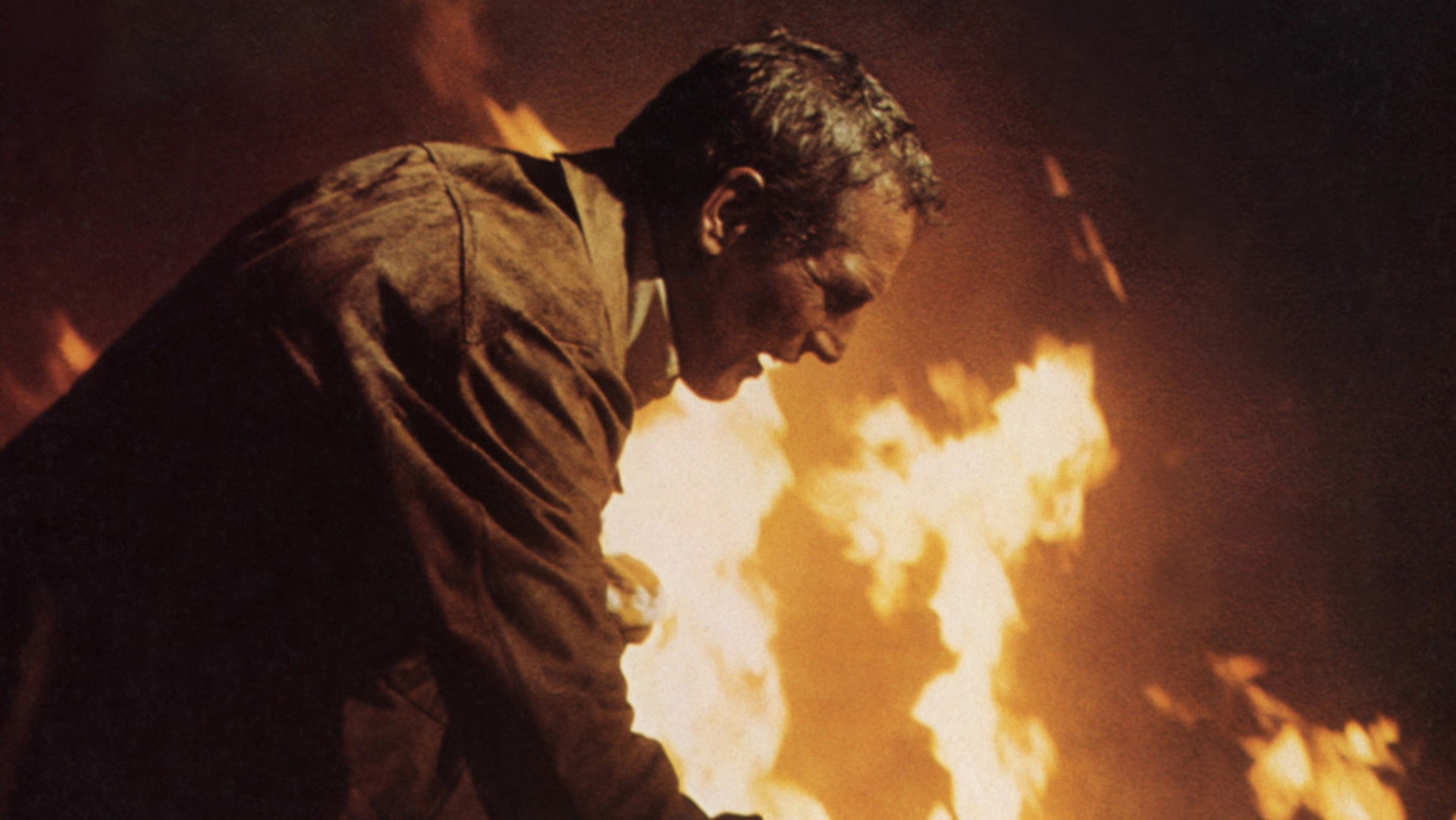
Irwin Allen’s high water mark came two years later when he released The Towering Inferno. A film that was a huge success. Grossed over $116 million against its $14 million dollar budget. Starring the likes of Paul Newman and Steven McQueen. Also, starring William Holden, who got a jolt of reality when he had to come to terms with the fact that he was no longer a major draw compared to the other two leads.

It co-starred many up and comers in the business like Richard Chamberlain, Robert Wagner, and a future murderer, OJ Simpson. Sorry, alleged murderer. Along with Newman and McQueen was actors like Faye Dunaway pre-Chinatown, Network, and Mommy Dearest. Also, featuring music by the king himself, John Williams.
It’s History is Just as Interesting
The film came to be after two different studios bough right for two books discussing the same subject. Due to the scale of the project, both Warner Bros and 20th Century Fox combined their forces to turn the books each studio bought into one major picture. Stirling Silliphant was tasked to create a single story from the novels The Tower by Richard Martin Stern and The Glass Inferno by Thomas N. Scortia and Frank M. Robinson.

Both disaster novels were based on new-found fears about high-rise buildings being susceptible to fires. This was mainly drawn from the construction of the new World Trade Center towers in New York. The buildings were still under construct when the books were released. The completion of both towers were done a year after the film’s release.
This was back when our biggest concerns were fires taking down buildings. Not aircraft. Too soon?
While many disaster movies from the seventies usually formed around natural or man-made creations, toward the end of the decade they were using anything and everything to pose a threat to people. However, by the end of the decade, people were over disaster movies but there are a few that stood the test of time. The Towering Inferno is one of them.
Leave a Reply